

From Safety to Superiority: Why Standards in Metal Fabrication Matter More Than Ever
Table of Contents
- How Advanced Tools Help Meet Metal Fabrication Certifications
- What Are Metal Fabrication Certifications—and Why Do They Matter?
- Top Metal Fabrication Certifications Required in the GCC Region
- Regional Standards and Certifying Bodies in the GCC
- Understanding the Role of Local Standards
- How Morshedi Manages the Certification Process Step-by-Step
- Ready to Partner with Morshedi for Certified Metal Fabrication Excellence?
Imagine standing in front of a towering skyscraper. The steel beams holding it together didn’t end up there by chance—they were shaped, cut, and assembled according to strict standards. Behind every metal joint, beam, and weld lies a world of certifications and regulations that ensure safety, precision, and performance.
At Morshedi Building Metal Products Manufacturing LLC, we don’t just bend and cut metal—we build trust. For over 20 years, our reputation in the GCC has been built on a deep commitment to quality, innovation, and certified excellence.
In today’s competitive construction and manufacturing sectors, choosing a fabrication partner is about more than just getting the job done. It’s about compliance, safety, international recognition, and future-proofing your project. And that’s where metal fabrication certifications become crucial.
This article explores the most important global and GCC-specific standards in metal fabrication. Whether you’re an engineer, architect, or project manager, understanding these certifications will help you make informed, future-focused decisions.
So let’s dive into the world of weld approvals, ISO benchmarks, and regional standards—and see how they shape the very framework of our cities and industries.
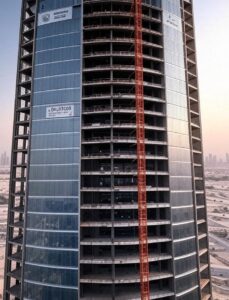 Precision at every level: Adhering to global metal fabrication standards ensures this skyscraper stands tall and safe.
How Advanced Tools Help Meet Metal Fabrication Certifications
Before we dive into the technical details of metal fabrication certifications, let’s take a step back and think about why precision matters so much in the first place.
One of the key ways companies like Morshedi achieve accuracy and consistency is by using advanced technologies such as CNC bending and tube laser cutting. These methods don’t just enhance quality—they also help us meet and exceed certification requirements.
Curious how cutting-edge tools are reshaping modern construction?
Check out our article on 5 powerful benefits of CNC bending and laser cutting to learn how these innovations are setting new standards in the industry.
What Are Metal Fabrication Certifications—and Why Do They Matter?
custom structural beams or precision components for medical equipment, clients expect products that meet strict standards. That’s where metal fabrication certifications come in.
These certifications are formal acknowledgments issued by regulatory bodies or third-party organizations that a company’s processes, materials, or products meet specific industry standards. They validate everything from welding procedures and material strength to safety practices and environmental compliance.
Without these certifications, even the most well-designed product can be rejected in high-stakes sectors like aerospace, oil & gas, and infrastructure development. More importantly, certifications serve as a benchmark for:
Safety
Durability
International Trade Compliance
Reputation and Trust
In fact, many government contracts and large-scale projects in the GCC and beyond require certified materials and processes to even consider a bid.
“Certifications aren’t just about checking boxes—they’re a language of trust between fabricators and clients.”
— American Welding Society (AWS)
Top Metal Fabrication Certifications Required in the GCC Region
Certifications in the metal fabrication industry vary globally, but certain ones are especially critical for operating in the GCC region. These not only ensure safety and performance but also align with regional compliance, project eligibility, and client trust.
Below is a table summarizing the most recognized and commonly required certifications in the GCC metal fabrication market:
Table 1: Key Metal Fabrication Certifications in the GCC
| Certification | Issued By | Scope | Why It Matters in the GCC |
|---|---|---|---|
| ISO 9001 | International Organization for Standardization | Quality Management Systems | Required for public and private tenders across the GCC. |
| ISO 14001 | ISO | Environmental Management Systems | Increasingly important due to environmental regulations. |
| ISO 45001 | ISO | Occupational Health and Safety | Mandatory in many oil & gas and infrastructure projects. |
| AWS D1.1 | American Welding Society | Structural Welding Code – Steel | Essential for welding jobs in structural applications. |
| ASME Certification | American Society of Mechanical Engineers | Pressure Vessels & Boilers | Required in process, chemical, and petrochemical plants. |
| EN 1090 | European Committee for Standardization (CEN) | Structural Steel Fabrication in Europe | Needed for exporting to or working with EU-based clients. |
| API 650 | American Petroleum Institute | Welded Tanks for Oil Storage | Common in GCC’s oil and gas sector. |
These metal fabrication certifications don’t just validate processes—they open doors. Holding multiple international and industry-specific certifications strengthens a company’s position in high-value sectors like aerospace, rail, energy, and defense.
“When you have ISO or AWS certifications, it’s not just about quality—it’s a message that says, we are ready to take on your most critical projects.”
— FabTech Middle East Conference, 2023
Advanced technology like CNC laser cutting and skilled operators are essential for meeting stringent metal fabrication standards and delivering high-quality components.
Regional Standards and Certifying Bodies in the GCC
While international standards such as ISO and AWS are widely recognized, the GCC region also has its own set of requirements, regulations, and certification bodies that fabricators must understand to operate successfully.
Let’s take a closer look at key regional authorities and what they require:
Table 2: Regional Standards and Certifying Bodies in the GCC
| Authority / Organization | Country | Focus Area | Relevance to Metal Fabrication |
|---|---|---|---|
| SASO | Saudi Arabia | National Product Safety and Quality Standards | Mandatory certifications for construction & steel products |
| ESMA | United Arab Emirates | Standardization and Metrology | Ensures metal products meet UAE’s industrial standards |
| GSO | Gulf-wide | Harmonization of standards across GCC states | Coordinates certification policies across member states |
| ADNOC / ARAMCO | UAE / Saudi | Oil & gas-specific technical and safety requirements | Require strict compliance with welding and material specs |
Understanding the Role of Local Standards
When a project is located in the GCC, meeting ISO or ASME standards alone may not be enough. For example:
A steel frame approved under ISO 9001 might still be rejected by SASO if it doesn’t meet national labeling and documentation rules.
A weld inspected under AWS D1.1 might not pass final clearance for an ADNOC project unless UAE-specific safety guidelines are also addressed.
Therefore, a fabricator that wants to win bids and deliver on-time in the GCC must align with both international and local certification structures.
“Working in the Gulf means knowing your client’s local compliance needs as well as their global expectations.”
— GCC Engineering Weekly, 2024
In the next section, we’ll explore how companies like Morshedi manage the certification process step-by-step, ensuring every detail meets or exceeds required standards.
How Morshedi Manages the Certification Process Step-by-Step
strategic priority. Our process is built to ensure that every component, every weld, and every document aligns with the strictest metal fabrication certifications, both international and regional.
Here’s how Morshedi handles this journey step by step:
Step-by-Step Certification Workflow at Morshedi
Project Analysis and Certification Mapping
Every project begins with a requirements audit. Morshedi’s quality engineers assess which standards apply—whether ISO 9001, AWS D1.1, or a local authority like SASO or ESMA.
Supplier Qualification
Only suppliers with relevant and verified certifications are approved. This guarantees that raw materials meet the required mechanical and safety standards from day one.
Process Calibration and Internal Testing
Machines, especially CNC systems and welders, are calibrated according to international norms (like ASME Section IX). Test runs and mock inspections are done to ensure compliance.
Third-Party Inspection and Documentation
Independent inspectors are brought in for key phases. Documentation—including Mill Test Certificates, Welding Procedure Specifications (WPS), and Inspection & Test Plans (ITP)—are compiled as per client and certifier expectations.
Final Certification Audit and Submission
The full certification dossier is submitted to the relevant body—ISO, ASME, ADNOC, or otherwise. Morshedi tracks approval timelines and supports clients with all required clarifications.
“Certification is the foundation of industrial trust. Without it, even the best metalwork goes unnoticed.”
— International Journal of Engineering and Manufacturing Standards, 2022
For further insights into standard welding compliance, see this detailed ISO Welding Quality Standards Guide from the International Organization for Standardization.
Conclusion: Why Metal Fabrication Certifications Are More Than Just Paperwork
are the DNA of high-performance production. At Morshedi Building Metal Products Manufacturing, we view metal fabrication certifications as an operational compass—one that aligns quality, safety, trust, and innovation under a unified standard.
By adhering to ISO, ASME, AWS, and GCC-specific regulatory requirements, we don’t just satisfy compliance—we demonstrate leadership in a competitive industry where every bolt and beam counts. The next time you’re evaluating a metal fabrication partner, ask not just “Can they do it?” but “Are they certified to do it right?”
At Morshedi, the answer is always a confident “Yes.”
Ready to Partner with Morshedi for Certified Metal Fabrication Excellence?
difference between a successful project and costly setbacks. At Morshedi Building Metal Products Manufacturing, we combine over 20 years of experience with rigorous quality control and certified processes to deliver tailor-made solutions you can trust.
Explore more about our expertise and commitment on our About Us page, or reach out directly through our Contact page to discuss your next project. We’re here to guide you through every step of the certification and fabrication journey.
Let’s build the future together—certified, reliable, and innovative.